FixForge › RV › RV Toilet Flapper Replacement
RV Toilet Flapper Replacement
An RV toilet that runs constantly or won't hold water in the bowl has a bad flapper (on Dometic/SeaLand models) or a worn blade seal (on Thetford models). Both fail for the same reason: the rubber seat seal dries and cracks from intermittent use. Both replacements take under 20 minutes and cost under $20. The most common mistake is replacing the seal and immediately re-using the toilet before the sealant (if you used it) has cured.
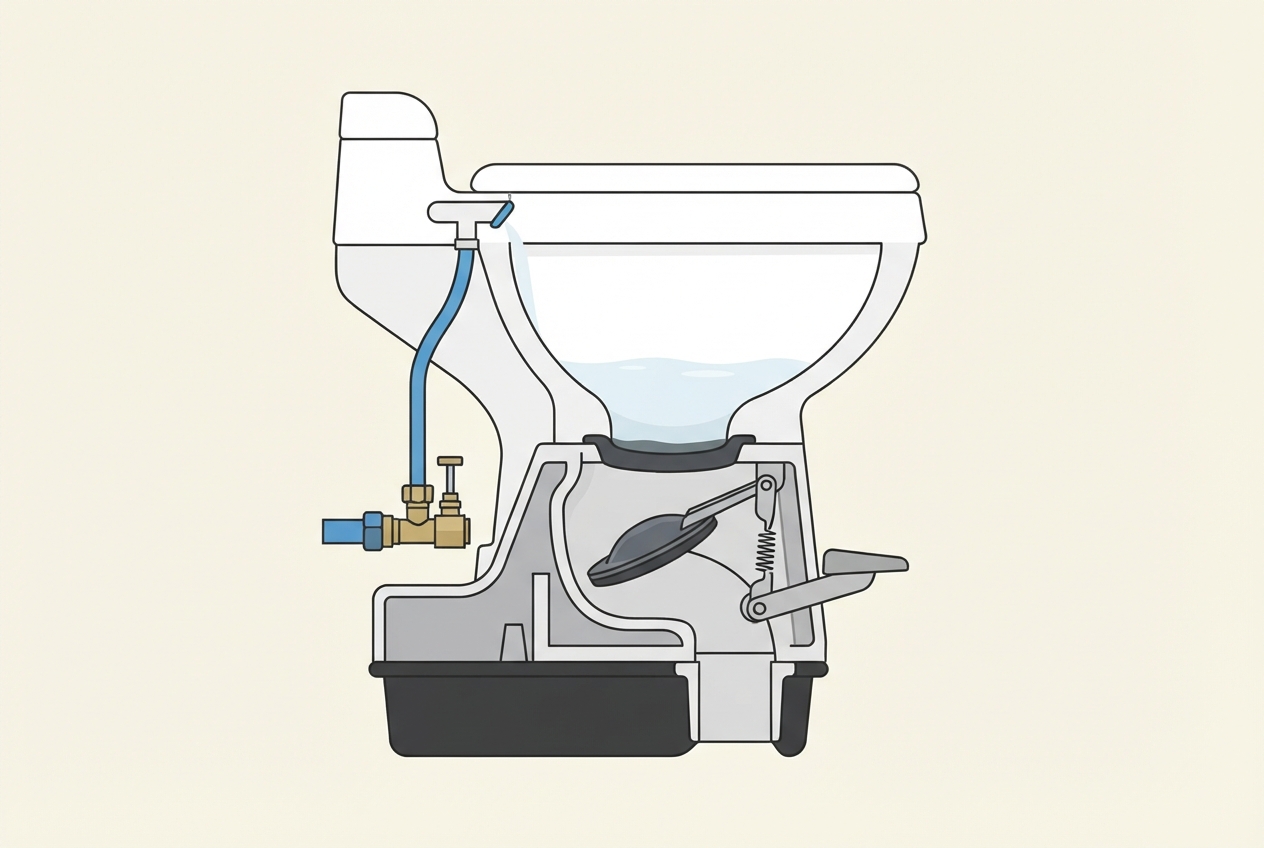
Running or leaking RV toilet — where to start
What actually causes RV toilet seal failure
Rubber seals dry out when the toilet sits unused — a fact of life for RVs in winter storage or parked for weeks at a stretch. Unlike a house toilet that cycles daily, an RV toilet might go 90 days without water touching the seal. The rubber hardens, loses its compression, and the seal doesn't close completely.
Mineral deposits from hard water compound the problem. When water evaporates off the sealing surface it leaves calcium and magnesium deposits behind. These form a rough, uneven surface the rubber has to seal against — and a rubber seal designed for a smooth surface against a mineral-crusted one leaks. You'll often see a white or off-white ring on the bowl seat and the flapper area when this is the primary cause.
This is not a catastrophic failure and it doesn't indicate something is wrong with your toilet. It's routine maintenance, the same category as replacing wiper blades or a furnace filter. The part is cheap, the job is fast, and you only have to do it once every several years if you maintain the seal properly afterward.
Diagnosing the specific failure: flapper vs. blade vs. water valve
Before you buy parts, confirm you have the right problem. There are three things that can cause similar symptoms:
Seal failure (flapper or blade): The bowl drains slowly after filling — water level drops over 10-30 minutes without flushing. Or the bowl is empty when you come back after an hour. Push the flush pedal down to the closed position and hold it firmly. If this stops the drain, it's the seal. Add a few drops of food coloring to the bowl — if it appears in the black tank within 20 minutes without you flushing, you've confirmed a seal leak.
Water valve failure (spray nozzle/solenoid): The toilet runs constantly — you hear water trickling into the bowl even without pressing the pedal. This is water entering from the top, not draining from the bottom. The inlet valve (controlled by the flush pedal mechanism) is stuck open or leaking. This is a different repair from the seal.
Floor flange seal: If you see water on the floor at the toilet base rather than in the bowl, the wax ring or rubber gasket at the floor flange has failed. The toilet needs to be removed and reseated. This is rare on RVs but happens after hard road vibration.
The seal replacement procedure below addresses only the flapper/blade seal. Confirm that's the correct diagnosis before buying parts.
Replacing a Dometic/SeaLand toilet flapper seal
Dometic toilets (sold under both the Dometic and SeaLand brands) use a ball-and-flapper design. The rubber seal ring sits around the ball at the base of the bowl. When the pedal is released, the ball seats against the seal to close the bowl opening. The correct replacement part for most Dometic models is the 385311012 seal kit, though older models use different part numbers — check your model's exploded diagram on Dometic's website before ordering.
- Turn off the water supply. Close the intake valve on the wall or floor behind the toilet, or turn off the RV water pump entirely. Flush the toilet to empty remaining water from the bowl and supply line.
- Assess whether you need to remove the toilet. On most Dometic models, the seal is accessible without removing the toilet from the floor. On some compact models, you'll need to break the floor seal. If you can see the ball mechanism from above with the bowl empty, work from there first.
- Remove the spray arm. The rinse arm that circles the bowl interior lifts straight up on most Dometic models — it simply unclips or unscrews depending on model year. Set it aside.
- Locate and remove the old seal. The flapper seal is a rubber ring seated around the ball valve at the bottom of the bowl. On Dometic 300/310/320 series, it rotates off — grip and turn counterclockwise about a quarter turn, then lift. Consult your model's exploded parts diagram for the exact tab and rotation direction if this description doesn't match what you see.
- Clean the seat surface thoroughly. Soak a cloth in white vinegar and wipe the entire seating surface where the old seal contacted the bowl. Mineral deposits here prevent the new seal from sitting flat. Take your time — a clean seat is more important than an expensive seal.
- Press the new seal into place. On Dometic 385311012 kits, the seal is a press fit — no sealant compound needed. Line up the tabs, press firmly, and rotate clockwise until it clicks into position. It should sit flush with no gaps visible from above.
- Reinstall the spray arm. Reverse the removal — click or screw back into position.
- Turn water back on slowly. Open the supply valve gradually and watch for leaks at the supply connection. Wait 2 minutes, then test the flush. Fill the bowl and watch for 15 minutes to confirm it holds water.
Replacing a Thetford blade seal
Thetford Aqua-Magic toilets (V, VI, Style, and Residence series) use a blade — sometimes called a slide valve — instead of a ball flapper. When you press the flush pedal, the blade slides back to open the bowl. When released, it slides forward to close it. The blade seal is a rubber gasket that the blade contacts to create the water-tight closure. The Thetford 31705 seal kit fits Aqua-Magic V models; the 34120 fits Aqua-Magic VI. Verify for your model year.
- Shut off the water supply. Same as above — close the supply valve or turn off the water pump and flush to clear the line.
- Assess toilet removal. Many Thetford models allow blade seal replacement in place. The blade mechanism is accessible from below the toilet by removing the base panel (2–4 Phillips screws around the bottom perimeter). Remove these screws and set the base panel aside.
- Locate the blade and seal. With the base panel off, you can see the blade mechanism. The rubber seal is a channel gasket that runs along the edge the blade travels across. It will be visibly cracked, hardened, or flattened if it has failed.
- Remove the old seal. The Thetford blade seal is held by friction and ridges — no adhesive. Starting at one end, peel it out of its channel. Work slowly to avoid tearing it (which makes cleanup harder). Note the orientation before removing.
- Clean the channel. Wipe the channel with a damp cloth to remove debris and any rubber fragments from the old seal. The channel must be clean for the new seal to seat properly.
- Install the new seal. Starting at the same end you started removing from, press the new seal into the channel. Work it in evenly, pushing it firmly into the ridge at each point around the curve. Don't rush — a partially seated section causes immediate failure on first use.
- Test the blade closure before reassembling. Press the flush pedal partially and release it a few times to confirm the blade moves freely and the seal compresses correctly. There should be no binding and no gaps between blade and seal visible when closed.
- Reinstall the base panel and restore water supply. Fill the bowl and confirm it holds water for 15 minutes before considering the job complete.
Seal spray as temporary repair
If a replacement seal isn't immediately available — you're mid-trip, the campground store doesn't carry the right part — Camco Slide Valve Lubricant ($7–12) and similar products can temporarily restore pliability to a drying rubber seal. Apply a thin coat to the entire sealing surface and work the flush pedal several times to distribute it. This works by re-softening the rubber surface, allowing it to compress and seal more fully again.
This is a legitimate one-trip fix. The lubricant treatment typically lasts days to a few weeks before the seal dries out again. It does not repair cracking or physical damage, and it does nothing if the seal has lost its shape. Order the correct replacement part the moment you get to data service and replace it properly at your next opportunity.
Do not use Vaseline, 3-in-1 oil, WD-40, or any petroleum-based product. These attack natural rubber and accelerate the breakdown you're trying to halt. Silicone-based or water-based products only.
When the toilet needs full replacement
Seal replacement handles the vast majority of RV toilet failures. But there are situations where a full toilet replacement makes more economic sense:
The bowl itself is cracked. Hairline cracks in porcelain or plastic bowl material are not fixable. A cracked bowl leaks sewage gas and water into the bathroom. Replace the toilet.
The flush mechanism is broken or stripped. If the pedal arm is cracked, the flush valve body is broken, or the internal linkage is stripped, the repair parts often cost more than a budget replacement toilet. Dometic and Thetford both sell complete units in the $120–200 range for standard models.
The seal has failed multiple times on the same toilet. If you've replaced the seal twice in 18 months on a toilet that's 10+ years old, the bowl seating surface itself is likely damaged or warped. New seals won't last against a compromised surface. Factor in total lifetime cost, not just the current $15 seal kit.
You want to upgrade. If you're replacing anyway, it's worth considering going up a size. Dometic and Thetford both make low-profile and standard-height models. Standard residential-height ($180–350) is significantly more comfortable for daily use in a full-time rig.
What it costs in 2026
| Item | Cost | Notes |
|---|---|---|
| Dometic seal kit (385311012 or equivalent) | $8–18 | Model-specific — confirm part number before buying |
| Thetford blade seal kit (31705 or equivalent) | $8–15 | Thetford Aqua-Magic V/VI; check model year |
| Seal lubricant (Camco Slide Valve Lubricant) | $7–12 | Temporary maintenance; extends seal life between replacements |
| RV flange wax ring (if toilet removed) | $5–12 | Reseal the floor flange if disturbed during toilet removal |
| New complete toilet (Dometic or Thetford) | $120–350 | When seal replacement fails repeatedly or bowl is damaged |
Frequently Asked Questions
How do I know if my RV toilet flapper needs replacement?
Two symptoms: the bowl won't hold water (drains slowly, empty within minutes) or the toilet runs constantly. Confirm by adding food coloring to the bowl — if it appears in the black tank within 20 minutes without flushing, the seal is leaking and needs replacement.
What is the difference between a Dometic and Thetford toilet seal?
Dometic uses a ball-and-flapper design (rubber ring around a ball at the bowl base). Thetford Aqua-Magic uses a blade/slide valve design (flat rubber gasket the blade seals against). Parts are not interchangeable — buy brand and model specific.
Can I use Vaseline to lubricate an RV toilet seal?
No. Petroleum-based products degrade natural rubber and will accelerate the seal's failure. Use only silicone-based or water-based lubricants. Camco Slide Valve Lubricant is the standard option and is widely available at RV parts stores and Amazon.
How often should I replace my RV toilet seal?
No fixed schedule — replace it when it fails (the symptom is unmistakable). Most seals last 3–8 years. Extend life by adding a few drops of water-based lubricant to the seal every 3–4 months and leaving a small amount of water in the bowl before storage rather than storing dry.
Thetford and Dometic kits.
Check Price on Amazon →As an Amazon Associate, FixForge earns from qualifying purchases.