FixForge › Appliance › Dryer Making a Squeaking or Squealing Noise
Dryer Making a Squeaking or Squealing Noise
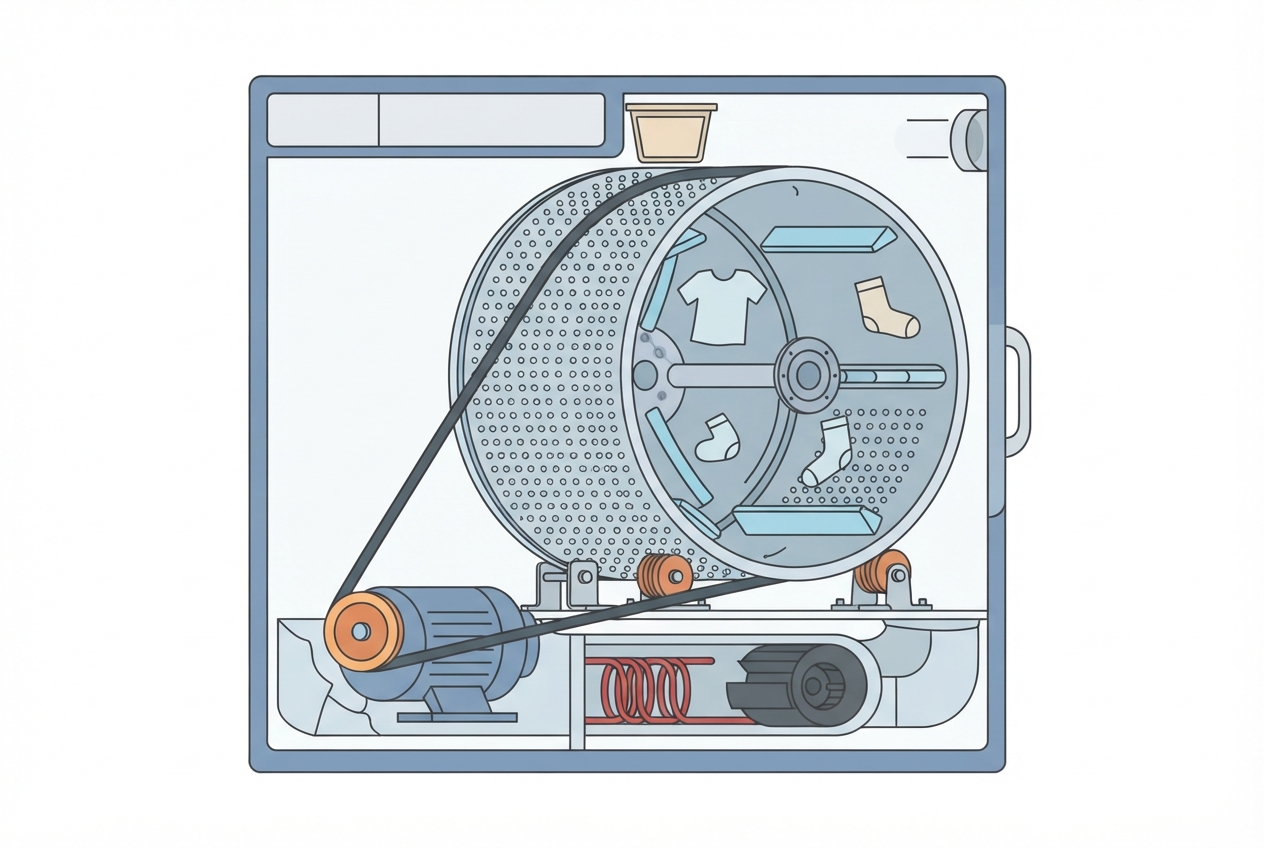
A squeaking dryer is almost always a worn drum support roller, a failing idler pulley, or worn drum glides. These are the moving parts that support the drum as it rotates — they wear out after years of use and produce squeaking, squealing, or thumping when they do. The repair is moderately involved (full disassembly) but the parts cost $15-40 and the fix lasts years.
Last Updated: June 2026
Fast answer
Identify the noise pattern: constant squeak throughout the cycle = drum support rollers or glides. Intermittent squeal that changes pitch = idler pulley. Rhythmic thumping = object in drum or worn drum bearing. Rollers and idler pulleys are the most common causes and most economical fixes.
Support rollers wear and flatten. Squeaking/thumping. Replace as a set ($15-25).
Keeps belt tensioned. Squealing pitch varies. $10-20, easy to access.
Felt or plastic pads at drum front. Worn = scraping/squeaking. $10-15.
Labor is the same whether you replace one part or all — do the kit.
Identifying the noise source
Before disassembling the dryer, try to characterize the noise:
- Constant squeak/squeal throughout cycle: Drum support rollers (rear) or drum glides (front). The noise doesn't change much regardless of load.
- Squealing that varies with belt tension: Idler pulley. The pitch or intensity changes, especially at startup and shutdown.
- Rhythmic thumping: Check for a shoe, tennis ball, or hard object in the drum first. If drum is empty and still thumping, worn drum bearing or severely flat roller.
- Grinding or scraping: Drum glides or felt seal worn through to metal-on-metal contact. Repair urgently — metal contact can score the drum.
The right repair strategy
Drum support rollers, the idler pulley, and drum glides all fail in the same mileage window. Since accessing any one of them requires full disassembly of the dryer cabinet, replace all three as a kit. The parts together run $25-50 — spending $15 on just rollers and then reopening the machine in 6 months for the idler pulley costs more in time than buying the kit upfront.
Repair procedure overview
- Unplug the dryer. If gas, shut off the gas supply.
- Remove the top panel (usually slides back after releasing front clips, or 2 rear screws).
- Remove the front panel (disconnect door switch wiring harness).
- Release belt tension by pushing the idler pulley toward the motor and slipping the belt off.
- Lift out the drum. This is a two-person lift on large capacity models.
- Replace rear drum rollers (two rollers on a shaft — snap or unscrew off the shaft).
- Replace idler pulley (one bolt or snap fitting on the idler bracket).
- Replace drum glides (front of drum — peel off old felt, clean surface, adhere new glides).
- Reassemble in reverse order. Thread belt correctly around drum and idler before setting drum.
- Run empty cycle for 10 minutes to seat glides before running with laundry.
Includes rollers, idler pulley, and glides. Match to your dryer model.
Check Price on Amazon →As an Amazon Associate, FixForge earns from qualifying purchases.
Replacement rollers for rear drum support. Verify model compatibility.
Check Price on Amazon →As an Amazon Associate, FixForge earns from qualifying purchases.
Front drum support pads. Prevents metal-on-metal contact.
Check Price on Amazon →As an Amazon Associate, FixForge earns from qualifying purchases.
Frequently asked questions
How long do drum support rollers last?
Typically 8-12 years of normal use. Dryers used heavily (large families, daily loads) may see roller wear at 5-7 years. Thin or flat spots on the roller wheels are visible inspection signs of failure.
Can I lubricate the idler pulley instead of replacing it?
Temporarily, yes — a shot of silicone lubricant can quiet a squealing pulley for weeks or months. But the bearing is failing; it will return. Since you're already inside the machine, replacement ($10-20) is the right call.
My dryer squeaks only when cold and then stops. Normal?
Minor squeaking at cold start that disappears as parts warm up can be normal belt stiffness in cold environments. If it's getting progressively louder or lasting longer into the cycle, the wear components are failing and replacement is coming.
Related guides
Last updated June 2, 2026. Repair procedures and part prices verified against manufacturer documentation and current market data. Prices may vary — confirm at time of purchase.