FixForge › Appliance › Washer Won't Drain
Washer Won't Drain
A washer that stops mid-cycle with water still in the drum is almost always a clogged drain pump filter, a kinked drain hose, or a failed lid/door switch. The fix is usually under 30 minutes and costs nothing or under $40. Here's how to diagnose which one you have.
Last Updated: June 2026
Fast answer
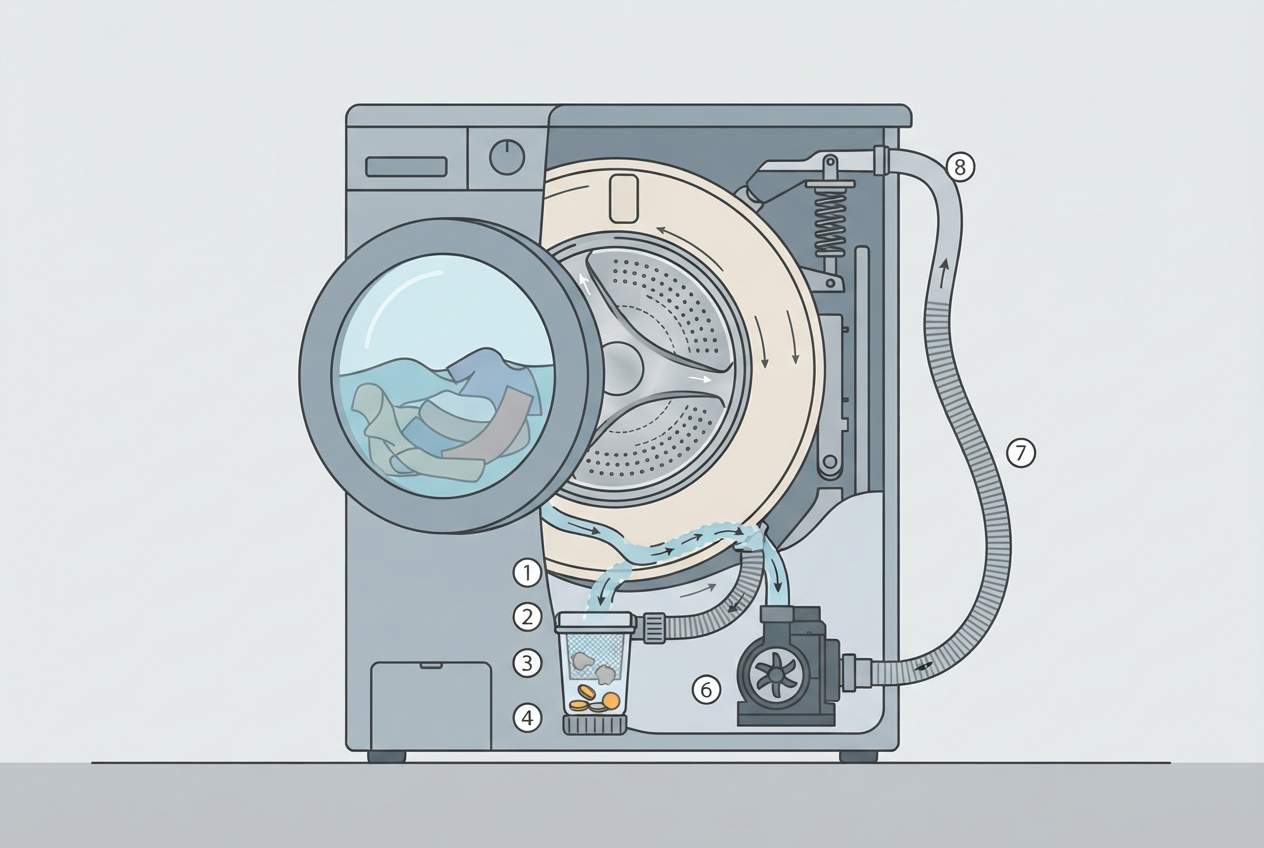
Check the drain pump filter first — on front-loaders it's behind a small door at the bottom front. On top-loaders, check for a kinked drain hose behind the machine. If both are clear, the pump itself ($25-50) or lid switch ($15-25) is the likely culprit. Standing water + no drain sound = pump. Pump hums but no drain = obstruction.
Front-loader filter clogs with lint and coins. Clean every 3-6 months.
Drain hose kinked behind unit is the most common top-loader cause.
Pump hums but won't drain = impeller jam. Pump silent = electrical fault.
Top-loaders won't spin or drain if lid switch fails. Easy $15 fix.
Step-by-step diagnosis
Start with the free checks before buying parts:
- Check the drain hose. Pull the machine away from the wall. The corrugated drain hose should have no sharp bends. If it's kinked, straighten it and run a drain cycle. Fixed 30% of cases.
- Clean the drain pump filter (front-loaders). Located behind a small access panel at the bottom front of the machine. Place towels and a shallow pan — water will spill. Unscrew the cap counterclockwise, remove debris. Coins, socks, and lint are the usual culprits.
- Test the lid switch (top-loaders). With the machine unplugged, locate the lid switch under the top panel near the hinge. A broken plastic tab on the lid itself is a common failure — it no longer depresses the switch when closed. Replacement tab or switch costs $5-20.
- Listen to the pump. Run a drain cycle and listen: if you hear humming but no water movement, something is jamming the impeller. If you hear nothing, the pump has lost power (check wiring) or failed entirely.
- Check the belt (older top-loaders). Some agitator-style machines have a belt connecting the motor to the pump. A broken belt means no agitation AND no drain. Access through the back panel.
Drain pump replacement
If the pump is confirmed failed, replacement is a manageable DIY job. Most front-loader pumps run $25-60 and take 45-90 minutes to swap. The pump is typically accessed from the front after removing the lower panel. Disconnect the two hoses (clamp pliers help), unplug the wiring harness, and unmount from the frame. Install reverse order. Make sure both hose clamps are fully seated before running a test cycle.
When to call a technician
Control board failures can prevent drain cycles and mimic pump failure. If the pump tests fine electrically but still won't run, a control board may be the issue. At $80-200+ for boards on mid-range machines, weigh repair cost against machine age. Machines over 10 years old with board failures often aren't worth repairing.
Compatible with Whirlpool, LG, Samsung front-loaders. Verify your model number.
Check Price on Amazon →As an Amazon Associate, FixForge earns from qualifying purchases.
Universal top-loader lid switch. Check compatibility with your model.
Check Price on Amazon →As an Amazon Associate, FixForge earns from qualifying purchases.
Prevents kinking, works with all major brands.
Check Price on Amazon →As an Amazon Associate, FixForge earns from qualifying purchases.
Frequently asked questions
How do I manually drain my washer?
Most front-loaders: use the drain hose (small hose next to the filter cap) to gravity-drain into a pan. Top-loaders: scoop water out with a bucket or wet vac, then access the pump. Some machines have a manual drain mode in the settings.
Can a clogged filter damage my washer?
Yes — a severely clogged pump filter makes the pump work harder, shortens its life, and can cause the machine to overheat. Clean front-loader filters every 3-6 months.
My washer drains slowly but does eventually empty. Is this a problem?
Slow draining indicates a partial blockage — usually in the filter or hose. Clean the filter first. Left uncorrected, slow drains stress the pump and eventually cause full failure.
Related guides
Last updated June 2, 2026. Repair procedures and part prices verified against manufacturer documentation and current market data. Prices may vary — confirm at time of purchase.