FixForge › Appliance › Dryer Takes Multiple Cycles to Dry Clothes
Dryer Takes Multiple Cycles to Dry Clothes
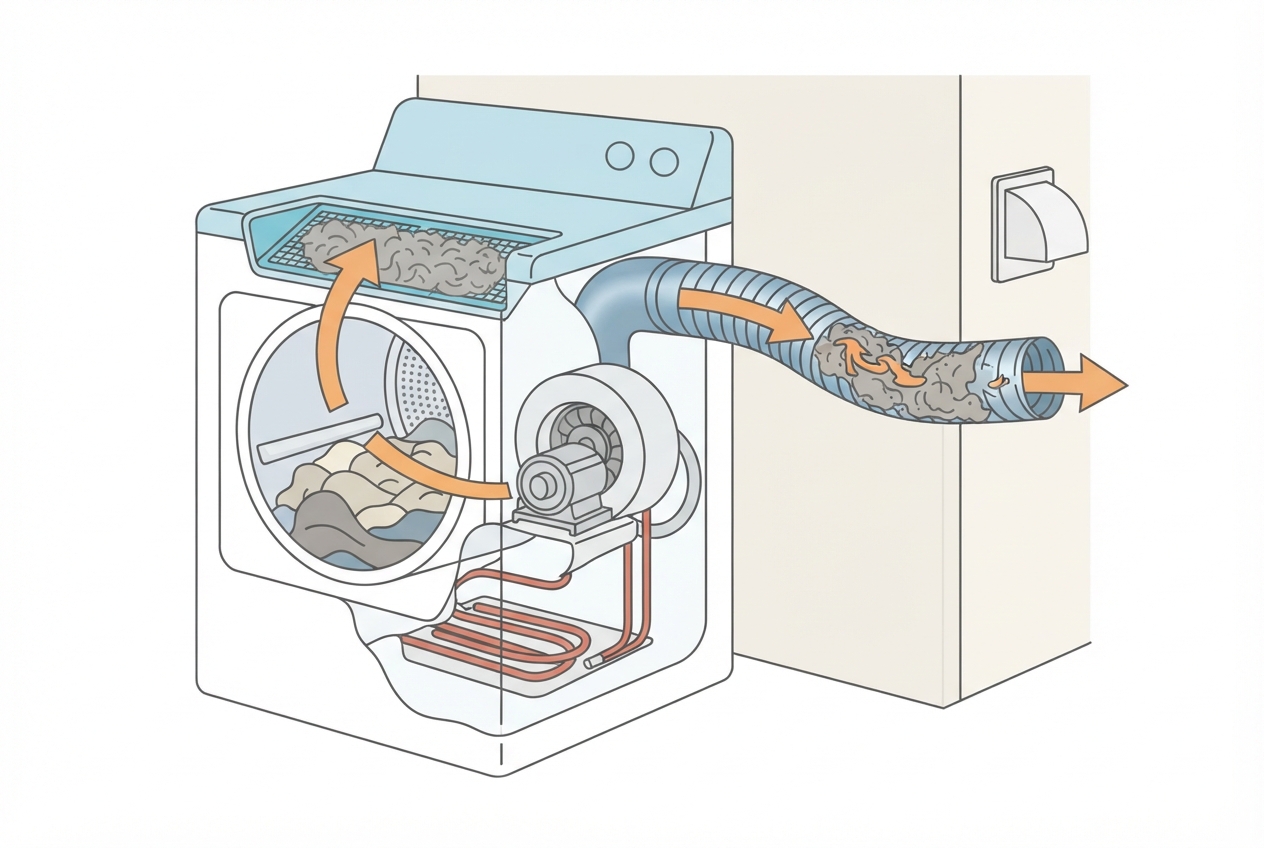
A dryer that takes 2-3 cycles to dry a normal load is costing you in electricity and time. The cause is almost always a restricted exhaust vent (70% of cases), a failing heating element producing less heat, or a clogged blower wheel reducing airflow. The vent check is free and takes 15 minutes.
Last Updated: June 2026
Fast answer
Disconnect the vent hose from the back of the dryer and run a cycle — if clothes dry normally, the vent is restricted. Clean the entire vent run from dryer to exterior. If drying is still slow with the vent disconnected, the heating element or blower wheel is the issue.
#1 cause. 25+ foot vent runs with multiple bends clog with lint.
Partial failure produces less heat. Test resistance — should read 8-12 ohms.
Dirty sensor bars tell dryer clothes are dry when they're not.
Lint-clogged wheel reduces airflow drastically. Access through front.
Step 1: Diagnose the vent (free, 15 minutes)
Disconnect the vent hose from the rear of the dryer (it typically clamps on). Run a small load — if it dries in one normal cycle, the vent is confirmed as the problem. Reconnect and clean the full vent run.
Signs of vent restriction without disconnecting: clothes are hot but damp after a cycle (heat with no airflow), the laundry room gets humid during drying, the exterior vent flap barely opens during operation.
Cleaning the vent: use a dryer vent cleaning kit ($20-30 — flexible rods with a brush that drill through lint). Feed from the dryer end through to the exterior. On vent runs over 25 feet with multiple bends, hire a vent cleaning service ($80-120).
Step 2: Clean the moisture sensor bars
Most modern dryers use moisture sensor bars (two metal strips inside the drum) to detect when clothes are dry and end the cycle automatically. If coated with dryer sheet residue, the sensors falsely read "dry" and the cycle ends early — clothes feel damp. Clean the bars with rubbing alcohol on a cotton ball. Located inside the drum near the lint trap opening.
Step 3: Check the heating element
A partially failed heating element can still produce heat but at reduced output — not enough to dry efficiently within a normal cycle. Test with a multimeter across the element terminals: a good element reads 8-12 ohms. Resistance significantly higher than 12 ohms indicates a partially failed element producing less heat.
Step 4: Inspect the blower wheel
The blower wheel moves hot air through the drum and out the vent. Lint bypassing a clogged or damaged lint screen can accumulate on the blower wheel, reducing airflow by 30-50% without fully blocking it. Access requires removing the front panel and drum. A clear wheel should spin freely without wobble.
Flexible rod kit, 30+ feet, attaches to drill. Clears full vent runs.
Check Price on Amazon →As an Amazon Associate, FixForge earns from qualifying purchases.
For electric dryers. Verify model compatibility before ordering.
Check Price on Amazon →As an Amazon Associate, FixForge earns from qualifying purchases.
For vent runs over 25 feet — maintains proper airflow to exterior.
Check Price on Amazon →As an Amazon Associate, FixForge earns from qualifying purchases.
Frequently asked questions
My dryer heats up fine but still takes too long. What's wrong?
Heat + long dry time = airflow problem, not heat problem. The vent is the primary suspect. Also check the blower wheel — if the wheel is partially clogged, hot air builds up in the drum but doesn't move through clothing efficiently.
How do I know if my vent needs professional cleaning?
Runs over 25 feet, more than 2-3 90-degree bends, or more than 5 years since last cleaning all indicate professional cleaning. If you can't reach the exterior vent cap from inside the run with a standard cleaning kit, professional service is worth it.
Can a dryer fire result from slow drying?
Yes — lint accumulation in the vent is a leading cause of house fires. A dryer that takes too long is often symptomatic of lint buildup that poses a fire risk. Address it promptly.
Related guides
Last updated June 2, 2026. Repair procedures and part prices verified against manufacturer documentation and current market pricing. Confirm prices at time of purchase.