FixForge › Appliance › Front Load Washer Door Won't Open
Front Load Washer Door Won't Open
A front-load washer door that won't open after a cycle is almost always one of three things: the door lock hasn't released yet (wait 2-3 minutes after cycle ends), there's water still in the drum triggering the flood-lock, or the door latch/lock assembly has failed. The machine is designed to stay locked when it senses water — drain the machine and the door will open.
Last Updated: June 2026
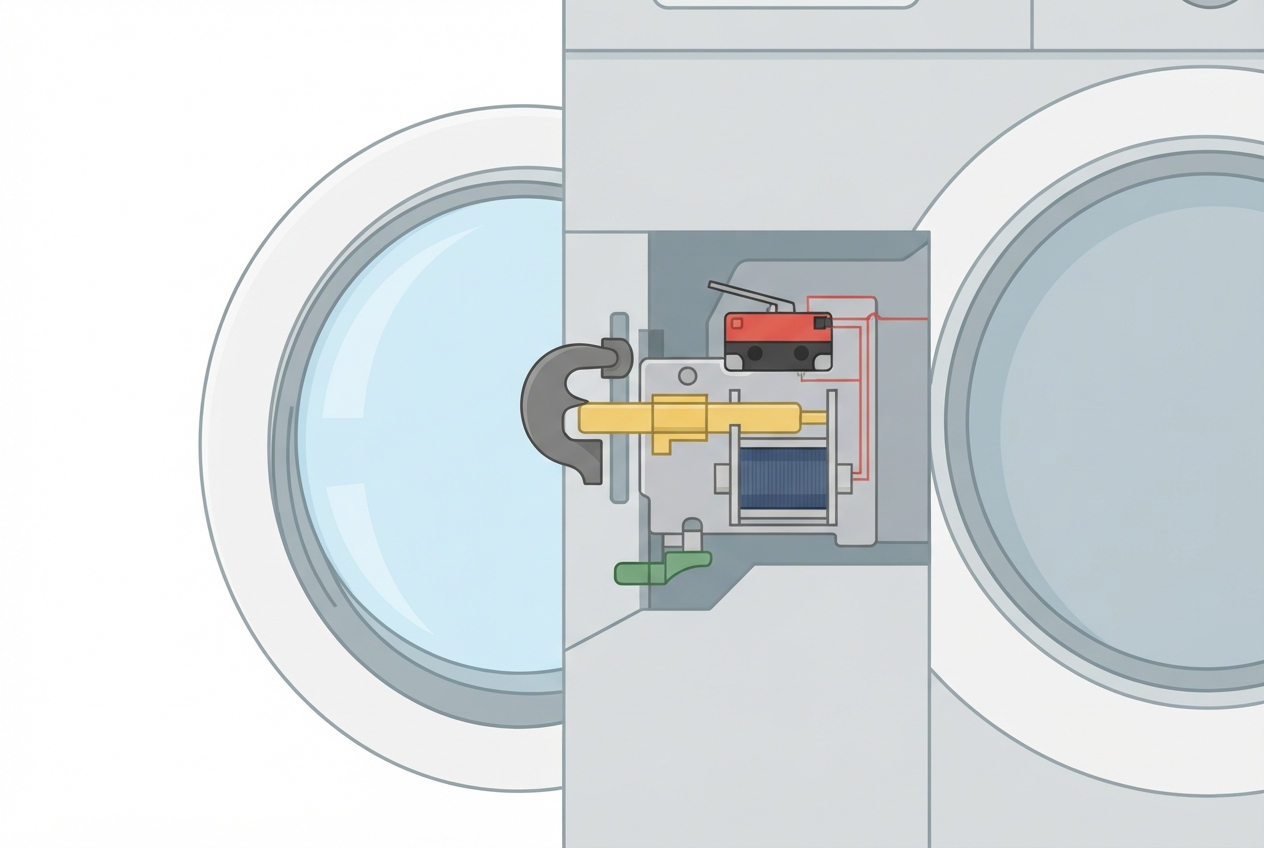
Fast answer
If the cycle just ended: wait 3 minutes. The thermal door lock takes time to cool and release. If still locked: check for water in the drum (look through the glass). If water is present, run a drain/spin cycle. If no water and still locked: use the manual release — a small cord behind the lower access panel.
Thermal door locks take 1-3 min to cool after cycle. Don't force it.
Flood-lock prevents opening with water present. Run drain cycle first.
Emergency cord behind lower panel. Drains and releases door.
If none of the above works, door lock ($20-40) has failed electronically.
Step 1: Wait for the thermal lock to release
Most front-load washers use a bi-metal thermal door lock that physically can't open until it cools below a set temperature. This takes 1-3 minutes after the cycle ends. The lock is a safety feature — the drum spins at 1000+ RPM during spin, and you can't open the door while it's moving. Wait, then try the handle again with firm pressure.
Step 2: Check for water in the drum
Look through the door glass. If there's visible water (even a small amount), the machine's flood prevention system will keep the door locked. The sensor that detects water level may have held the door locked due to an incomplete drain. Run a Spin Only or Drain+Spin cycle to remove the remaining water, then attempt to open the door.
Step 3: Use the manual emergency release
Every front-load washer has a manual door release — required by safety regulations. It's accessed through the lower front access panel:
- Unplug the washer.
- Remove the lower kick panel (usually snaps off or has 2 screws).
- Look for a small pull tab or cord, usually orange or red, near the door latch.
- Pull the cord firmly downward. You'll hear the latch release.
- The door should now open manually.
If there's water in the drum, it will spill when you open the door. Have towels ready and use the drain hose (also in the lower panel) to empty water into a pan first.
Step 4: Door lock assembly failure
If the manual release doesn't work or the door keeps locking mid-cycle, the door lock assembly itself has failed. The assembly contains a solenoid latch and in some models a thermal component. Test with a multimeter — the solenoid should show continuity. Replacement assemblies run $20-45 and are usually 4 screws and one wiring harness connector.
Model-specific door latch and lock assembly. Match your washer model number.
Check Price on Amazon →As an Amazon Associate, FixForge earns from qualifying purchases.
Replace if torn or moldy. Model-specific — enter your model number.
Check Price on Amazon →As an Amazon Associate, FixForge earns from qualifying purchases.
Monthly use prevents mold and odor in door seal area.
Check Price on Amazon →As an Amazon Associate, FixForge earns from qualifying purchases.
Frequently asked questions
Can I force open a locked washer door?
Don't force it — you'll crack the door boot seal (the rubber gasket around the door) which costs $50-150 to replace. Use the manual release instead.
My washer locks mid-cycle and won't finish. Is this the same problem?
Mid-cycle locking that doesn't release indicates either a water flood situation (check for leaks), a failed pressure sensor telling the machine it's overfilling, or a control board fault. These require more diagnosis than a stuck door after a normal cycle.
The door release cord is broken or I can't find it. What now?
Some older models don't have an easily accessible release. Access can sometimes be gained by removing the top panel and reaching down to the latch assembly, or by removing the back panel. As a last resort, contact the manufacturer — they can provide model-specific access instructions.
Related guides
Last updated June 2, 2026. Repair procedures and part prices verified against manufacturer documentation and current market data. Prices may vary — confirm at time of purchase.