FixForge › Appliance › Refrigerator Leaking Water
Refrigerator Leaking Water
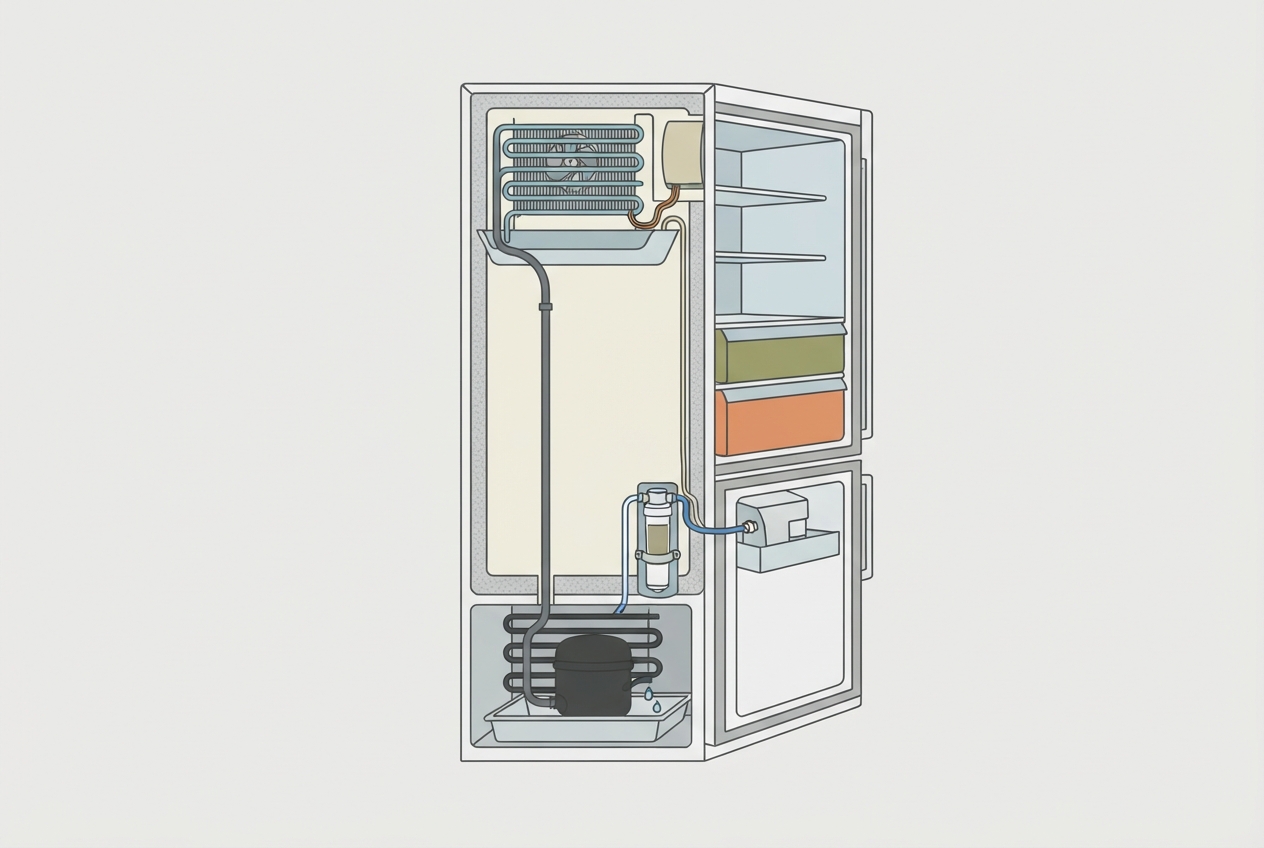
Water pooling under or inside your refrigerator is almost always one of four things: a clogged defrost drain (most common), a cracked or overflowing drain pan, an ice maker supply line leak, or a failed door gasket causing condensation. Three of four are free or near-free fixes.
Last Updated: June 2026
Fast answer
Find where the water is coming from: water inside the fridge near the back wall = clogged defrost drain. Water under the fridge = drain pan issue or supply line. Water near the ice maker = supply line or valve. Start by pulling the fridge out and checking the supply line fitting — finger-tight connections loosen over time.
Most common. Ice dam in drain tube sends meltwater to floor instead of pan.
Cracked or tilted pan ($10-20). Also check if AC is overworking the defrost.
1/4" supply line fitting loose or cracked. Tighten or replace line ($8-15).
Failed seal = warm humid air in = excess condensation. Check with dollar bill test.
Diagnosing the defrost drain clog
The most common refrigerator leak. During the defrost cycle, ice on the evaporator coils melts and drains through a tube to a pan under the fridge. If the tube ices over or gets blocked by debris, water backs up and flows into the refrigerator interior — usually pooling at the bottom of the fridge or under the crisper drawers.
To clear the drain:
- Remove the back interior panel of the freezer compartment (usually 4-6 screws).
- Locate the drain hole at the bottom of the evaporator coil housing.
- Pour a small amount of hot water into the drain hole to melt any ice blockage.
- Use a turkey baster or a pipe cleaner to clear debris from the drain tube.
- Confirm water flows through by pouring a cup of water into the drain — it should drain within 30 seconds.
Preventive: mix 1 tablespoon of baking soda into the water you use to flush the drain. Reduces odor and slows future buildup.
Checking the drain pan
The drain pan sits under the refrigerator, above the compressor. Heat from the compressor evaporates the water collected there. If the pan is cracked or tilted, it overflows before water evaporates. Pull the fridge away from the wall, remove the back lower access panel, and inspect the pan. A cracked pan costs $10-25 to replace. A full, intact pan means the defrost system is producing more water than normal — check door seals and defrost cycle timing.
Ice maker supply line
The 1/4" plastic or copper supply line runs from a saddle valve on the cold water supply to the back of the refrigerator. Connection points loosen over time, especially if the fridge has been moved. Check both ends: the valve connection and the refrigerator inlet fitting. Hand-tighten any loose connections. If the plastic line is cracked or has developed a pinhole, replace the entire line ($8-15 for braided stainless upgrade).
Universal and model-specific options. Verify dimensions match.
Check Price on Amazon →As an Amazon Associate, FixForge earns from qualifying purchases.
Braided stainless 6-foot line. Replaces plastic OEM lines prone to cracking.
Check Price on Amazon →As an Amazon Associate, FixForge earns from qualifying purchases.
Model-specific. Enter your model number to find the correct gasket.
Check Price on Amazon →As an Amazon Associate, FixForge earns from qualifying purchases.
Frequently asked questions
How do I do the dollar bill door seal test?
Close the door on a dollar bill — half in, half out. Pull the bill. If it slides out easily with no resistance, the gasket isn't sealing in that spot. Test all four sides. A failing gasket lets humid air in, which condenses and drips inside the fridge.
My refrigerator leaks only when the ice maker is running. What's wrong?
This isolates the problem to the ice maker water system: the supply line, inlet valve, or ice maker fill valve. Check the supply line first. If it's dry, the ice maker fill valve may be leaking internally — replace the valve ($20-40).
There's water under my refrigerator but the drain pan is empty and intact. Where is it coming from?
Check the supply line for a slow drip. Also check the defrost drain exit point under the fridge — if the tube is cracked where it meets the pan, water drips directly to the floor without entering the pan.
Related guides
Last updated June 2, 2026. Repair procedures and part prices verified against manufacturer documentation and current market data. Prices may vary — confirm at time of purchase.