FixForge › Appliance › Electric Stove Burner Not Heating
Electric Stove Burner Not Heating
An electric stove burner that doesn't heat is almost always a failed burner element ($10-25) or a burned burner socket ($8-15). Both are plug-in or screw-in replacements that take 10-15 minutes. The infinite switch (the dial) fails less often but is also a straightforward swap ($20-35).
Last Updated: June 2026
Fast answer
Swap the non-working burner with a working burner of the same size from another position on the stove. If the moved burner works in the new position, the burner element is fine — the socket or switch is the problem. If the moved burner doesn't work in the new position either, the burner element itself has failed.
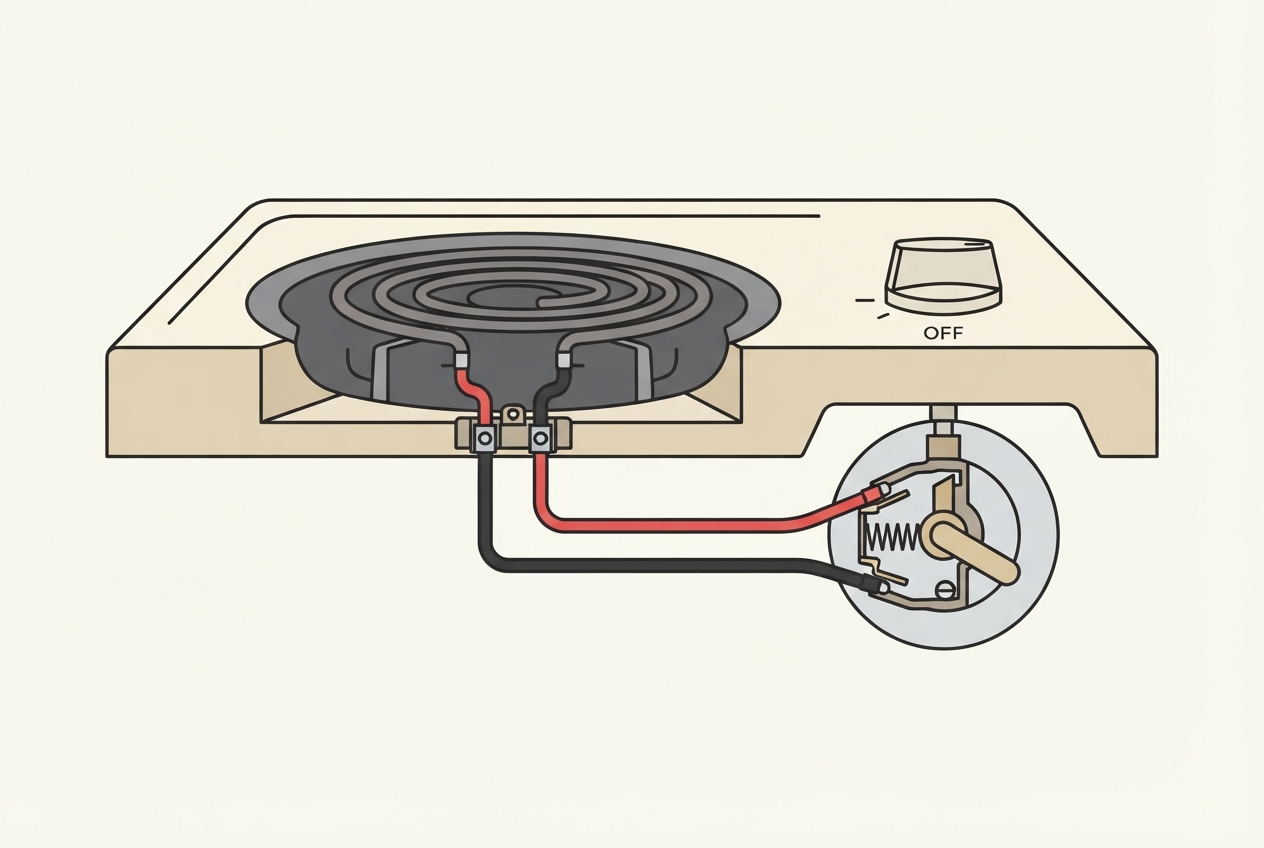
Move burner to another socket. Element works there = socket/switch issue.
Coil with visible burn mark or breaks. $10-25, plug-in replacement.
Socket terminals burn and corrode. $8-15, 10 min fix.
Burner gets no heat on any setting = switch failed. $20-35.
The swap test (start here)
Most coil-style electric stove burners plug into a socket — they lift out by pulling straight up. Swap the non-working burner with a working burner of the same size (front left with back left, for example). Run a test:
- Moved burner works in the new socket: The original burner element has failed. Replace it ($10-25 for a coil element).
- Moved burner doesn't work in the original socket: The socket is the problem. The element is fine. Replace the socket ($8-15).
- No heat on any burner setting but other burners work fine: The infinite switch (the control dial) has failed ($20-35).
Replacing a coil burner element
Coil burner elements plug into the socket with two prongs. Lift the element up slightly, pull toward you to unplug, and set aside. Install the new element by aligning the prongs with the socket and pushing in firmly until seated. Test on a low setting — it should begin to glow within 30-60 seconds.
Replacing a burner socket
The burner socket connects the burner to the wiring. Over time, the terminals inside the socket burn and corrode, creating a poor connection. With the range unplugged, open the cooktop (hinges at the front on most models), locate the socket wiring, disconnect and remove the old socket (usually clipped in), and install the new one. Match the terminal positions exactly.
Replacing the infinite switch
The infinite switch is the control behind the burner knob — it regulates current to the burner in a continuous variable manner (hence "infinite"). A failed switch produces no heat on any setting or only works on one setting. Access through the back panel of the range. Disconnect the terminal wires (photograph first), remove the mounting screws, and install the new switch. Match the wattage rating to your original.
Smooth-top (ceramic/glass) stoves
Smooth-top ranges use radiant or induction elements below the glass surface — not coil burners. A non-heating element on a smooth-top is accessed from below the cooktop surface and replacement is more involved. The swap test still works conceptually but requires comparing with a working zone's wiring rather than physically moving a burner.
Universal 6-inch and 8-inch burner elements. Match to your range brand.
Check Price on Amazon →As an Amazon Associate, FixForge earns from qualifying purchases.
Replacement terminal socket for coil ranges. Verify compatibility.
Check Price on Amazon →As an Amazon Associate, FixForge earns from qualifying purchases.
Control switch for electric burner. Match wattage rating to original.
Check Price on Amazon →As an Amazon Associate, FixForge earns from qualifying purchases.
Frequently asked questions
One side of my dual-element (large/small) burner doesn't work. What's wrong?
Dual-element burners have two coils — the inner element for small settings and both for high settings. If only high heat doesn't work, the outer element portion has failed. If only low settings don't work, the inner portion has failed. The infinite switch routes current differently to each — the switch may also be faulty.
My burner sparks when I plug it in. Is that normal?
A brief spark when first plugging in a new element can be normal — contact arcing. Repeated sparking during use, or a spark from a used element, indicates a damaged element or a burned socket. Stop using it immediately and inspect both the element prongs and socket terminals.
All my burners are on one breaker and none work. Is it the breaker?
Electric ranges typically have a double-pole 240V breaker. If it trips, all burners lose power simultaneously (though the oven may still work on 120V for the clock/light). Check the breaker — flip it fully off then back on. If it trips again, there's an electrical fault in the range that needs professional diagnosis.
Related guides
Last updated June 2, 2026. Repair procedures and part prices verified against manufacturer documentation and current market pricing. Confirm prices at time of purchase.