FixForge › Vintage › Stripping Cast Iron Seasoning
How to Strip Old Seasoning From Cast Iron
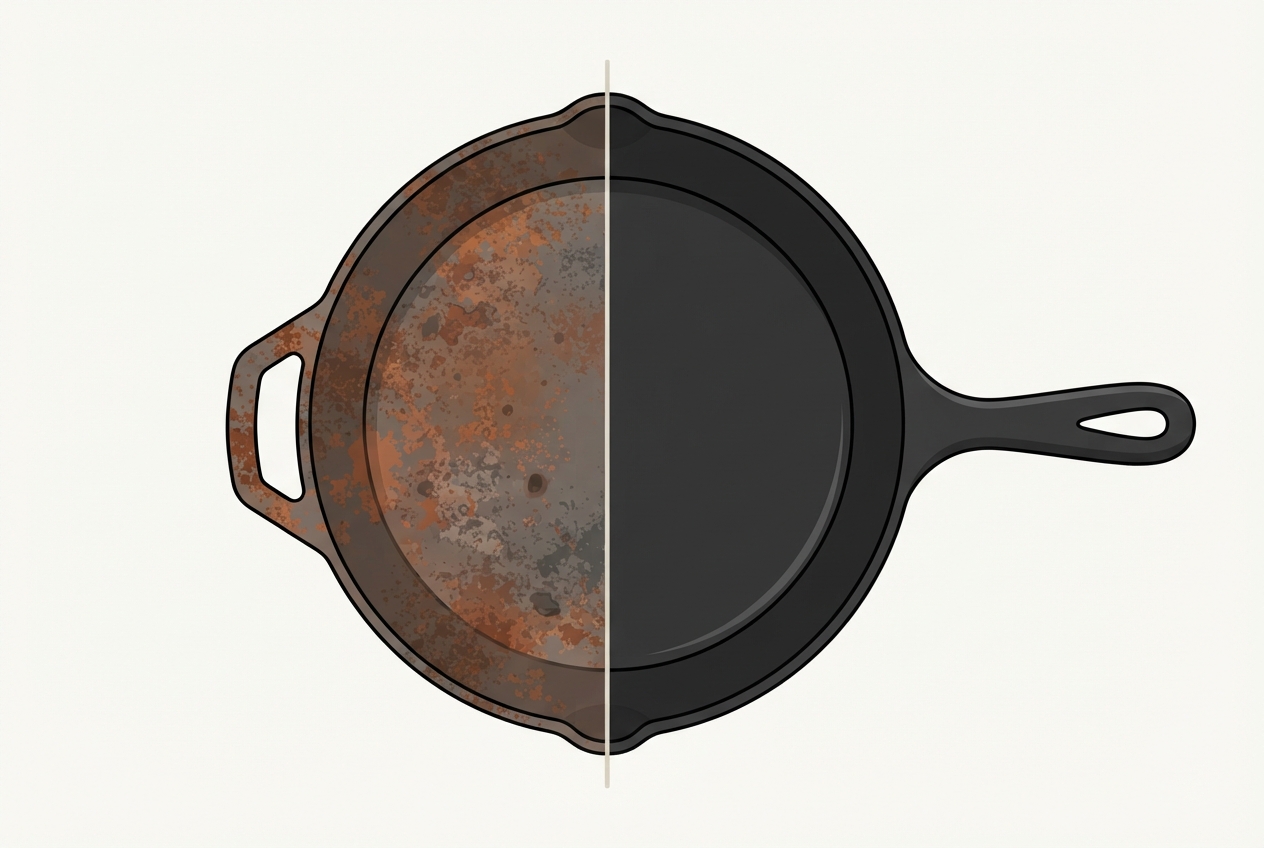
Stripping means taking a pan back to bare grey iron: every layer of old seasoning, burnt-on carbon and grease. It is the right job for a pan caked in thick, uneven black crust or one with seasoning that keeps flaking. It is the wrong job for a pan that is only a bit sticky or dull. There are three chemical ways to do it and one popular shortcut that the sources advise against.
Last Updated: November 2026
Fast Answer
For one pan, use lye-based oven cleaner: spray it all over outdoors, seal the pan in a plastic bag for at least 24 hours, then scrub with steel wool and hot soapy water. For several pans, a lye bath is cheaper. Either way, wear long rubber gloves and eye protection, because the active ingredient causes severe skin burns and eye damage. Lye will not touch rust; treat that separately. Then season at once.
Lodge and Field Company fix most seasoning problems by scrubbing and re-baking, not stripping.
America's Test Kitchen: spray, bag, leave 24 hours outdoors or in a garage, scrub, repeat if needed.
Collector formula: one pound of 100% lye to five gallons of water, in a covered plastic container.
A Lodge representative calls the heat excessive; collector sources warn of warping or cracking.
Do You Actually Need to Strip It?
The cookware makers treat stripping as a last resort. Lodge's fix for sticky or flaking seasoning is to scrub and bake the pan again. Field Company says oven seasoning from scratch is for rehabilitating a skillet that was rusty or totally stripped. Smithey reserves a full strip for heavy rust.
Strip when the pan has a thick, uneven crust of old carbon, seasoning that flakes off again after you have re-baked it, or an unknown history that you want to clear before cooking in it. For anything less, start with fixing sticky or flaking seasoning.
Method 1: Oven Cleaner in a Bag
This is the only stripping method with a test-kitchen source behind it. America's Test Kitchen's procedure:
- Work outdoors. Spray the skillet all over with oven cleaner.
- Wrap or seal the sprayed skillet in a plastic bag and leave it outside or in a garage for 24 hours.
- Scrub the skillet all over with steel wool and hot soapy water to remove all the residue.
- Rinse. If build-up remains, repeat.
- Follow with a short soak in equal parts white vinegar and water to deal with any rust, then rinse, dry and season immediately.
The cleaner has to be the lye type. The Cast Iron Collector says Easy-Off Heavy Duty works best and that cleaners sold as reduced odour typically use active ingredients other than lye, so they do not work for this. It also allows more time than the test kitchen does: several days in a warm spot, reapplying as needed, for heavy build-up.
What the Safety Data Sheet Says
Take the product's own safety data sheet seriously. For Easy-Off Heavy Duty Oven Cleaner aerosol, the 2021 sheet from Reckitt Benckiser states:
- It contains sodium hydroxide at 1 to 5 percent and has a pH of 13.3.
- It causes severe skin burns and eye damage.
- It is an extremely flammable aerosol.
- Wear long rubber gloves and eye protection when using it.
- Use it only with adequate ventilation and avoid breathing the spray mist.
- It may be corrosive to metals, and metals are listed as incompatible materials.
That last point matters for what you rest the bag on. The Cast Iron Collector notes that if the catch pan under the bag is aluminium, the lye can eat into it. Use plastic or a surface you do not care about, and keep the whole thing away from children and pets for the duration.
Method 2: Lye Bath
A lye bath is the same chemistry in a tub: sodium hydroxide dissolved in water, with the pan left to soak for days. It is slower to set up and far cheaper per pan, and one batch is reusable for months. It is a collector method with no manufacturer source, and the lye itself is a serious hazard in crystal form. The mixing ratio, the container, the protective gear and the soak times are on their own page: Cast Iron Lye Bath.
Method 3: Electrolysis
An electrolysis tank removes build-up as well as rust, so it can do both jobs in one. It is slow on heavy crust: The Cast Iron Collector reports a couple of sessions of about eight hours each on electrolysis alone, and says a lye soak first cuts that to roughly an afternoon. Collectors therefore often use lye for the build-up and electrolysis for the rust. Setup is covered in Cast Iron Electrolysis Tank Setup.
Why Not the Self-Cleaning Oven?
Running a pan through the oven's self-clean cycle does burn everything off, and it is widely recommended online. The sources that have looked at it advise against it:
- Lodge, via Consumer Reports. A Lodge representative told the magazine that the high heat melts the seasoning off the pan. Consumer Reports' tester called putting a pan through a self-clean cycle overkill.
- The Cast Iron Collector. Self-cleaning ovens can vary in their working temperatures by hundreds of degrees, and overheating some pieces may induce warping or cracking. It adds that enamelled pieces should not go through the cycle and that wooden handles will not survive it.
The warping and cracking warning comes from collector sources, not from a manufacturer's published care page. But the two chemical methods above carry no such risk to the pan, and a warped or cracked skillet cannot be repaired. See Cracked, Pitted or Warped Cast Iron for what that damage looks like.
What Stripping Does Not Do
Lye removes organic build-up: seasoning, grease and carbon. It does not remove rust, and collector sources say it is much less effective once build-up is almost pure carbon. If orange shows through after stripping, treat it with a short vinegar soak or one of the other methods in Cast Iron Rust Removal: 5 Methods Compared.
Check what the pan is before you choose a method. Lye should not be used on enamelled cast iron, where it dulls the finish, or on cast aluminium, which it dissolves.
Straight After Stripping
A stripped pan is bare iron and will begin to rust almost immediately. Rinse it thoroughly, dry it with heat and get oil on it without delay. The Cast Iron Collector suggests cold water for the final rinse to slow the flash rust. The seasoning sequence is in Re-Seasoning Cast Iron After Stripping.
Supplies reference
| Item | Detail | Notes |
|---|---|---|
| Lye-based oven cleaner | Easy-Off Heavy Duty; sodium hydroxide 1 to 5% | Not a reduced-odour or fume-free type. |
| Heavy plastic bags | To seal the sprayed pan for 24 hours or more | Rest it on plastic, never aluminium. |
| Long rubber gloves and eye protection | Required by the product's safety data sheet | Work outdoors. |
| Steel wool | For scrubbing off the loosened residue | With hot soapy water. |
Sources
Ratios, temperatures, times, dates and safety statements on this page come from the sources below, and the text names which source each comes from. Manufacturer, university extension, government and safety-data-sheet sources are used where they exist; where a point rests on collector or test-kitchen references only, the text says so. Plain handling steps are general practice.
- America's Test Kitchen: How to Strip a Cast Iron Skillet
- Reckitt Benckiser: Easy-Off Heavy Duty Oven Cleaner Safety Data Sheet (2021)
- The Cast Iron Collector: Cleaning
- The Cast Iron Collector: Electrolysis
- The Cast Iron Collector: Lye Bath
- Consumer Reports: How Should You Clean a Cast Iron Skillet
- Lodge Cast Iron: Troubleshooting
- Field Company: Cast Iron Care and Seasoning FAQ
The lye-based cleaner named by America's Test Kitchen and The Cast Iron Collector. Read the safety data sheet warnings above before use.
Check Price on Amazon →As an Amazon Associate, FixForge earns from qualifying purchases.