FixForge › Vintage › Cast Iron Lye Bath
Cast Iron Lye Bath: Mixing, Soak Time and Safety
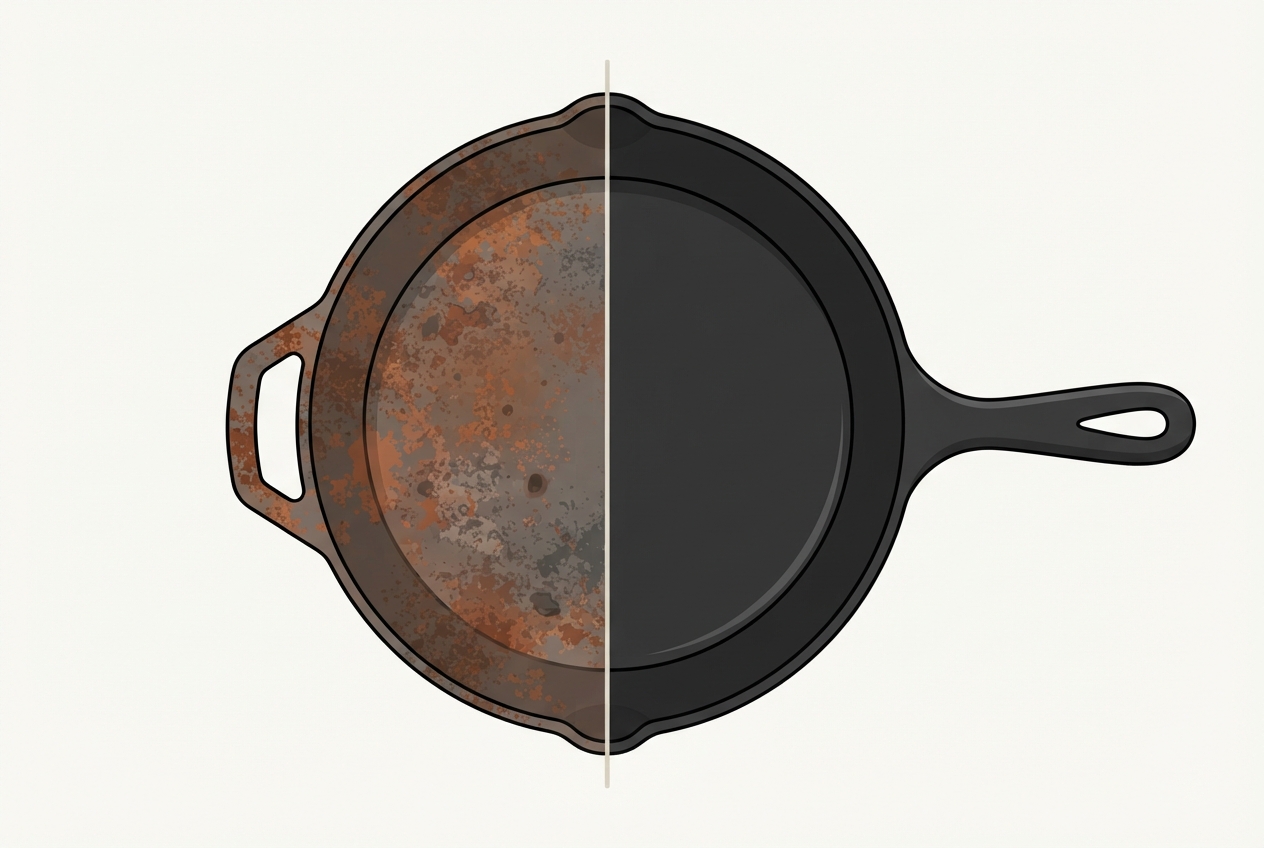
A lye bath strips old seasoning and baked-on grease from cast iron with no heat and no scrubbing: the pan sits in a tub of sodium hydroxide solution for days and comes out bare. It is the cheapest method if you have several pans. It is also the one with the most dangerous ingredient. The method comes from collector references; the hazard facts below come from the CDC.
Last Updated: November 2026
Fast Answer
Use a sturdy plastic container with a lid. Fill it with five gallons of cold water, then add one pound of 100% sodium hydroxide crystals to the water, never water onto lye. Wear eye protection and rubber gloves. Submerge the pan and leave it from a few days to a week. Rinse it thoroughly with plenty of water. Lye will not remove rust and must not be used on aluminium or enamel.
The Cast Iron Collector's formula. The lye must be 100% sodium hydroxide.
Never the reverse. Dissolving releases substantial heat.
CDC: solid or concentrated sodium hydroxide causes severe burns.
A few days to a week. Warmer solution works faster.
What a Lye Bath Does and Does Not Do
- It removes old seasoning and greasy build-up.
- It is slow on build-up that is almost pure carbon. The Cast Iron Collector says lye is much less effective once that is what remains.
- It does not remove rust. Collector sources are explicit that lye will not affect rust. A rusty pan needs electrolysis or a vinegar soak afterward.
- It does not harm bare iron. The Wagner and Griswold Society reports pieces left in lye for months without damage.
If you have one pan, lye-based oven cleaner in a sealed bag is the same chemistry with less to set up. That method is in How to Strip Old Seasoning From Cast Iron.
The Hazard, From the CDC
Sodium hydroxide is not a mild chemical. These points come from the CDC's NIOSH Pocket Guide and the ATSDR medical management guidelines, not from hobby sites:
- Solid sodium hydroxide or concentrated solutions can cause severe burns with deep ulcerations.
- Prevent skin contact and prevent eye contact.
- Dissolving it in water liberates substantial heat, which may be sufficient to ignite combustible materials.
- It is incompatible with metals such as aluminium, tin and zinc.
- First aid for skin: flush exposed areas with water for at least 15 minutes.
- First aid for eyes: flush for at least 30 minutes.
- Neutralising substances should not be used on skin. Water is the treatment.
Keep a hose or tap within reach while you mix. Keep the tub covered, labelled and somewhere children and animals cannot get to it.
What to Buy
The lye must be pure. The Cast Iron Collector specifies 100% sodium hydroxide and names Rooto Household Drain Opener and Roebic Crystal Drain Opener as products that are. It warns that Crystal Drano contains other ingredients and is not suitable. Read the label: if it lists anything besides sodium hydroxide, do not use it.
The container should be sturdy plastic with a secure cover. The same source notes that plastic which is not UV resistant goes brittle if left outdoors, so a tub that lives outside should be checked now and then.
Mixing
| Source | Formula |
|---|---|
| The Cast Iron Collector | One pound of lye crystals per five gallons of water |
| Wagner and Griswold Society | One can of lye with 4 to 5 gallons of water in a plastic container (can size not stated) |
- Put on eye protection and rubber gloves. Wear long sleeves.
- Work outdoors. Fill the plastic container with the measured amount of cold water first.
- Add the lye crystals to the water slowly, stirring with a plastic or wooden stirrer. The solution will get warm.
- Never pour water onto dry lye. Both collector sources insist on this order, and the CDC's note on the heat released is the reason.
- Fit the cover.
Soaking
- Lower the pan in gently on a wire or plastic hook so you can retrieve it without reaching into the solution. Avoid splashing.
- Leave it. The Cast Iron Collector says from a few to several days; the Wagner and Griswold Society says several days to a week for really dirty pieces.
- Check by lifting the pan out with gloves on and brushing a patch. When the black comes away to grey metal, it is done.
- Heavy carbon may need a scrub and a second soak.
Temperature matters. The Cast Iron Collector notes that the warmer the solution is, the faster it works, so a bath in a cold garage in winter will be slow.
Rinsing
Rinse the pan very thoroughly with running water. The Wagner and Griswold Society recommends a hose at relatively high pressure. The Cast Iron Collector says to rinse well before seasoning and that dilution with tap water is enough. It specifically warns against using vinegar to neutralise full-strength lye crystals, which it says can be quite dangerous.
The pan is now bare iron. If it shows rust, deal with that next (see Cast Iron Rust Removal: 5 Methods Compared); the Wagner and Griswold Society follows its lye bath with a vinegar soak. Then dry it with heat and season without delay: Re-Seasoning Cast Iron After Stripping.
What Must Not Go in a Lye Bath
- Aluminium. The Cast Iron Collector says lye will dissolve cast aluminium ware, and NIOSH lists aluminium as incompatible with sodium hydroxide. This includes aluminium lids, aluminium-handled pieces and any aluminium container.
- Enamelled cast iron. Lye will dull the finish.
- Wooden handles. Remove them first.
Nickel and chrome plated iron is a different matter. Both The Cast Iron Collector and the Wagner and Griswold Society say lye can safely be used on plated pieces. It is electrolysis and high heat that put plating at risk.
Reuse and Disposal
A lye bath lasts. The Cast Iron Collector reports reusing one batch for over a year. For disposal it suggests diluting and pouring it down a household drain a gallon at a time with cold water running, and says households on septic systems should avoid large undiluted amounts. That is one hobbyist's practice, not a regulation, so check your local rules for household chemical disposal before you tip out five gallons.
Supplies reference
| Item | Detail | Notes |
|---|---|---|
| 100% sodium hydroxide (lye) crystals | One pound per five gallons of water | Rooto and Roebic drain openers are named as 100% lye. Not Crystal Drano. |
| Sturdy plastic container with lid | Five gallons or more | Never aluminium. |
| Chemical-resistant gloves and eye protection | Required: NIOSH says prevent skin and eye contact | Keep running water within reach. |
| Plastic or wooden stirrer and a wire hook | For mixing and retrieving the pan | No aluminium tools. |
Sources
Ratios, temperatures, times, dates and safety statements on this page come from the sources below, and the text names which source each comes from. Manufacturer, university extension, government and safety-data-sheet sources are used where they exist; where a point rests on collector or test-kitchen references only, the text says so. Plain handling steps are general practice.
Check the label says 100% sodium hydroxide and nothing else. One pound makes a five-gallon bath.
Check Price on Amazon →As an Amazon Associate, FixForge earns from qualifying purchases.
Sodium hydroxide causes severe burns. Long gloves and sealed eye protection are the minimum.
Check Price on Amazon →As an Amazon Associate, FixForge earns from qualifying purchases.